Why We Love the Scent of Sweet Orange Oil
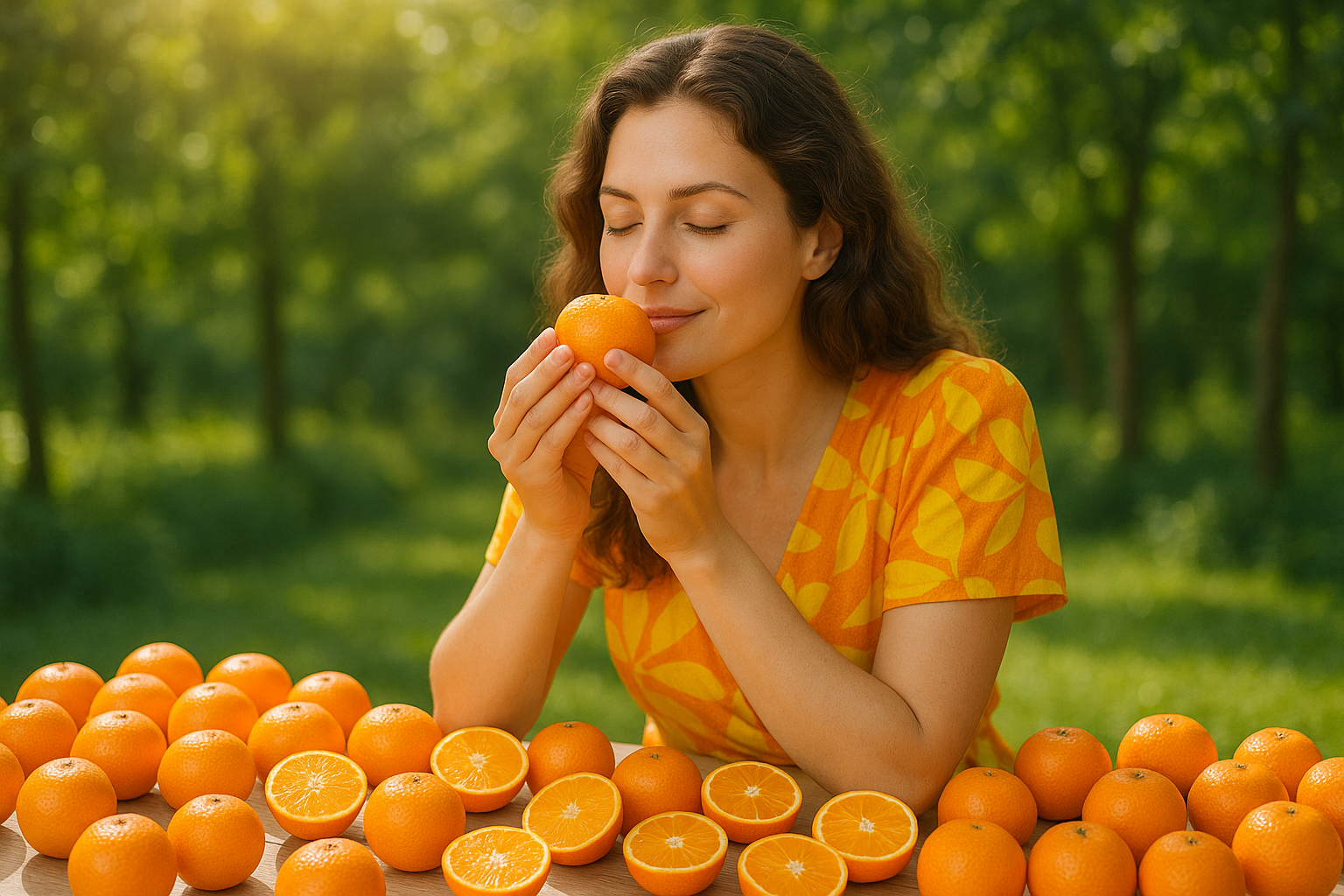
Try this with the next orange you peel: press a thumbnail into the rind and watch the fine spray that comes off it. That mist catches the light for a second, and within a breath the whole table smells of it. The mist is the oil — it sits in tiny pockets just under the skin of the fruit, and the moment you break the peel it lets go. I've done this since I was a girl in my grandmother's kitchen, and it is still the first thing I think of when people ask why sweet orange is one of the two scents we chose.
So let me tell you about that scent, and why it sits where it sits in our blend.
What it actually smells like
Sweet orange is not just "orange." Up close it's juicy and round, with a sweetness that almost feels warm. Underneath that, if the oil came from real peel, there's a faint green bitterness — the smell of the rind itself, not the juice. That bitter edge is the part I listen for. Candy-scented oranges and most "orange" cleaning sprays skip it entirely, which is exactly why they smell flat to me. The bitterness is the signature of the real thing.
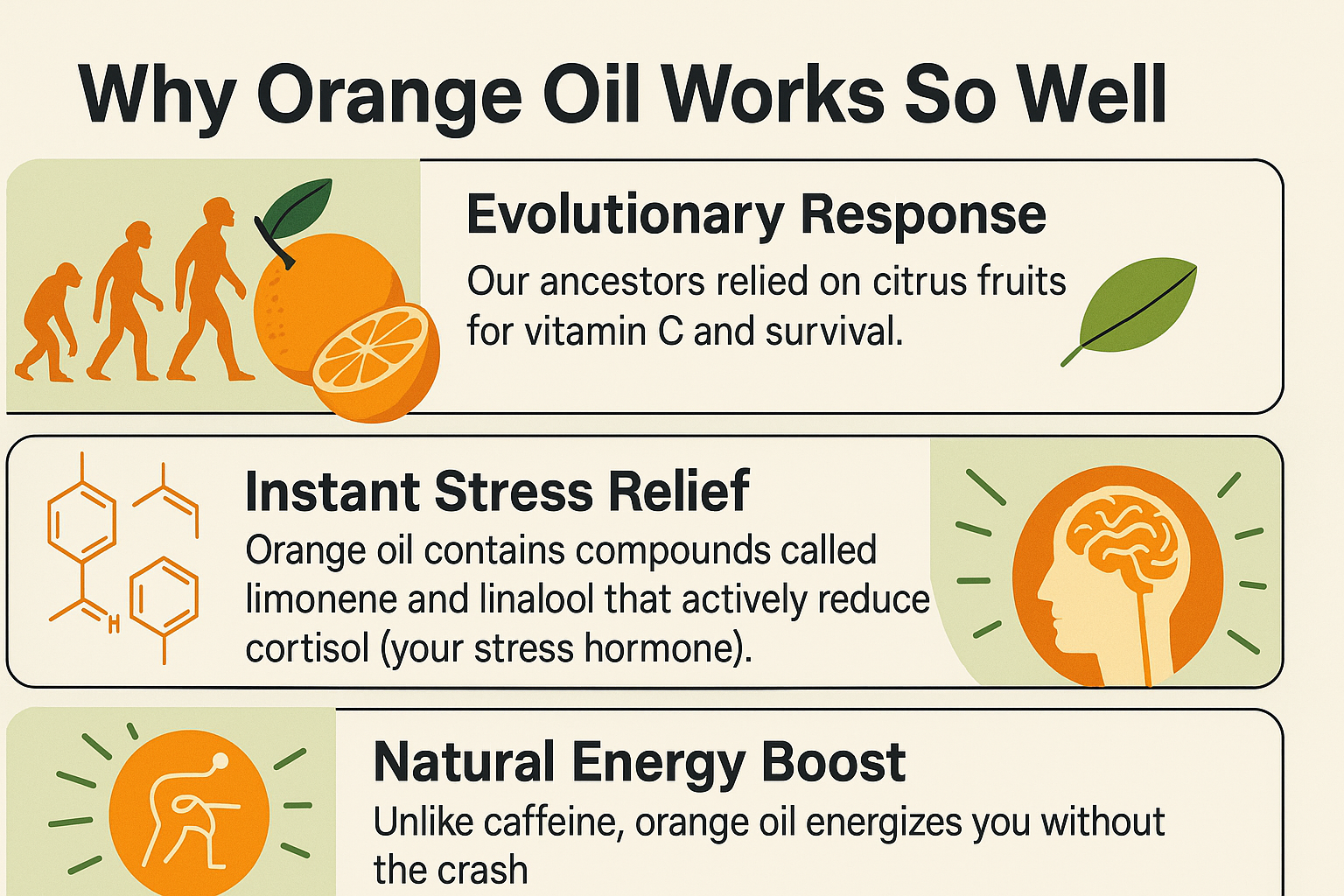
The bright top of that aroma comes mostly from limonene, the aroma compound that gives citrus peel its zesty character. It is what makes the scent read as vivid the instant you open the bottle.
Why I set it next to lavender
People expect a Thai massage oil to lean on lavender, and ours does. But I never wanted a single-note oil. Lavender on its own can feel a little serious. Orange next to it changes the whole character — it brightens the edges and keeps the blend from feeling heavy.
Here's the part most people don't notice. Sweet orange is a top note: it's the first thing you smell and the first thing to fade. Lavender is slower and stays behind. So in our oil the two don't sit still — the orange greets you when the bottle opens and during the first minutes of a massage, and as it lifts away the lavender comes forward. One scent, but it moves. That layering is the whole reason I blend them together instead of choosing one.
The oil I reach for in daylight
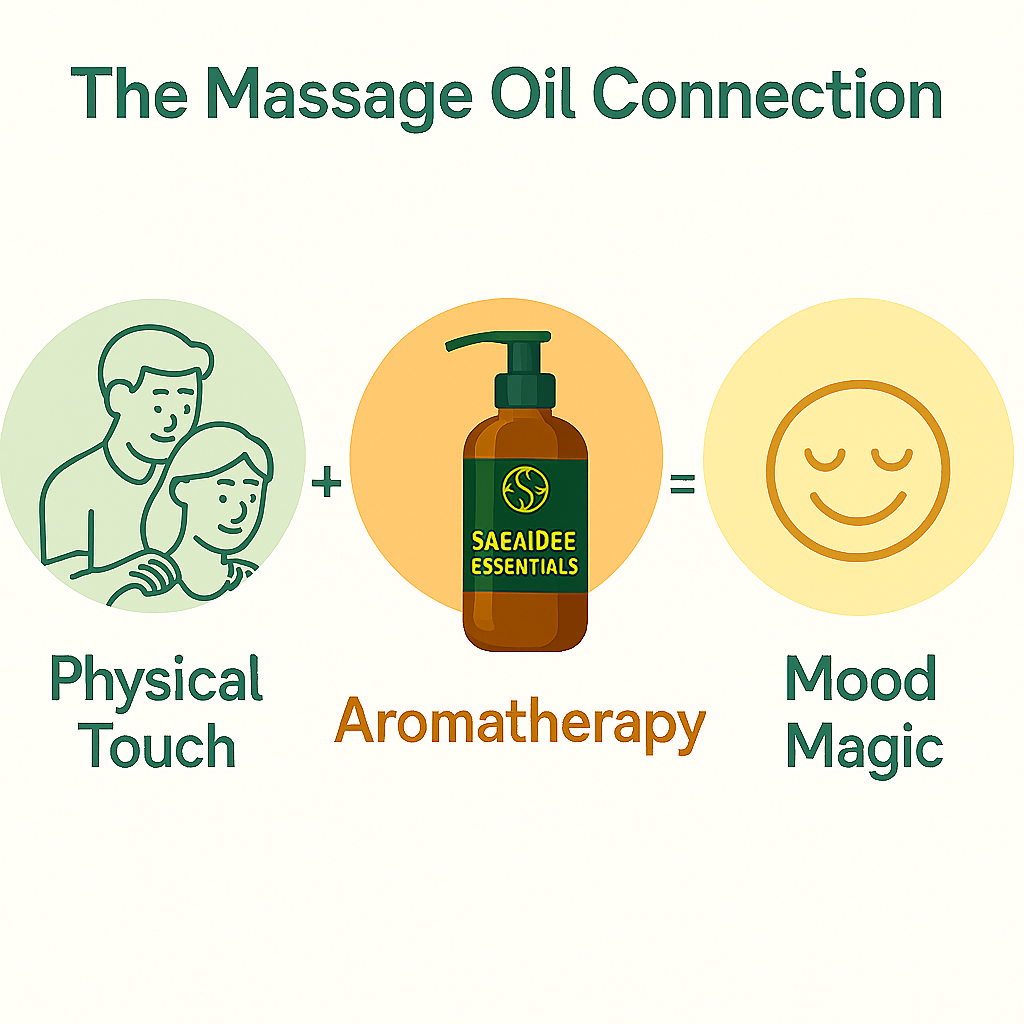
I keep this for mornings and the middle of the day. After a shower I'll warm a little between my palms and work it into my arms and shoulders, slowly, while the citrus is still at its brightest. The carrier oils — jojoba, argan, sweet almond, avocado, aloe vera — glide on without that heavy film, sink in, and leave my skin soft. The orange fills the room for a few minutes; the lavender lingers on my skin for longer.
If the afternoon goes long, a quick hand rub is enough to bring the scent back. That's it — no ceremony, just a minute with a smell I like.
Why I'm fussy about where it comes from
Sweet orange is one of the easiest scents to fake and one of the hardest to fake well. A synthetic version can copy the sweet top and miss everything underneath. We use sweet-orange essential oil pressed from real peel, blended in small batches, with no synthetic fragrance and a touch of vitamin E to keep the oils fresh. Vegan, cruelty-free, and registered with the Thai FDA (12-1-6700042374).
When you look for an orange oil of your own, smell for that green bitterness under the sweetness. If it's there, the oil came from fruit. If all you get is candy, keep looking.
That mist off a fresh peel is a small thing. But it's a real one, and I'd rather build a bottle around something real than around a smell that only pretends.
Sweet orange and lavender, blended by hand in Thailand — Sabaidee Essentials, 300ml, vegan, no synthetic fragrance.