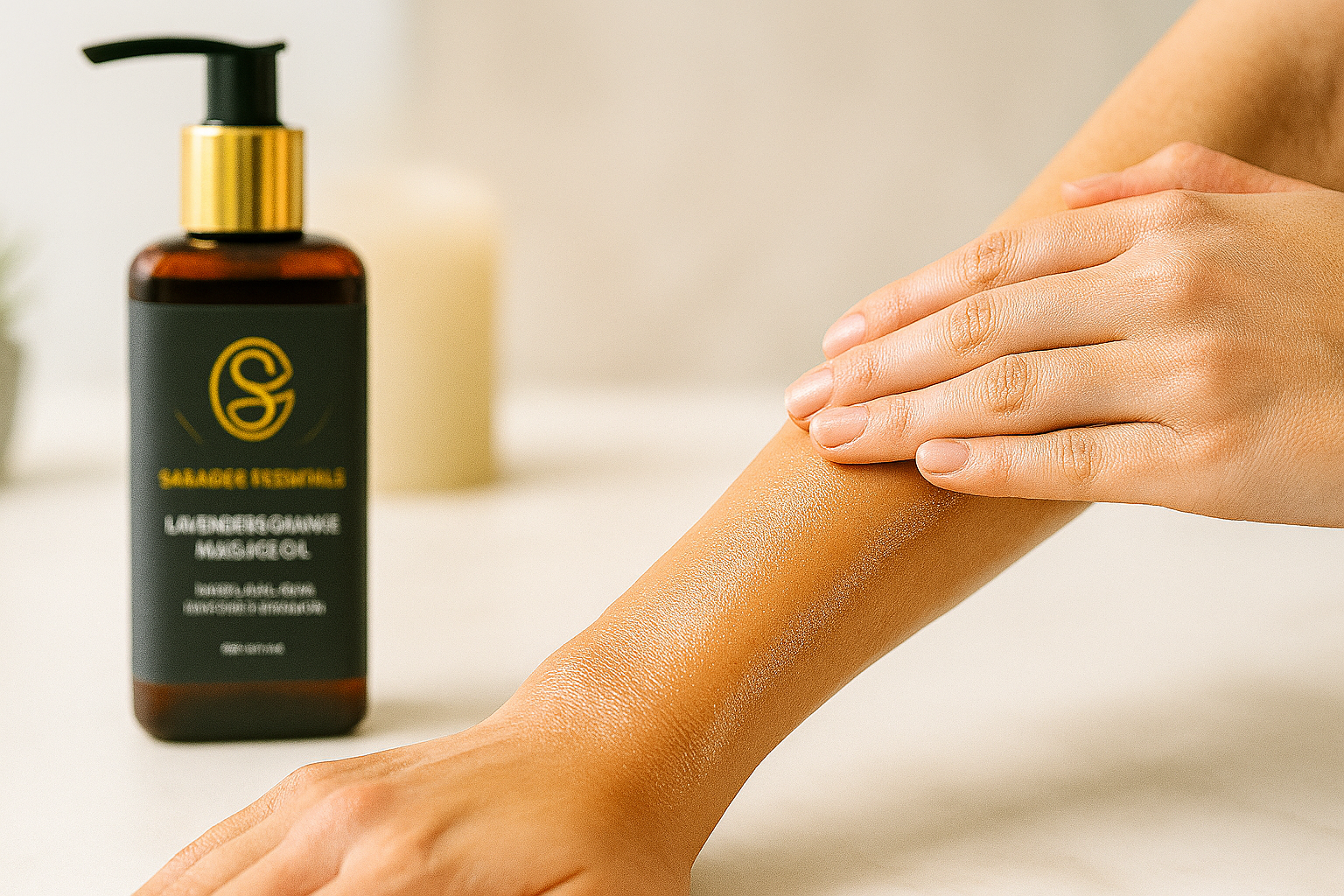
Post-Workout Massage Rituals: A Grounding Wind-Down
Whether you're a dedicated athlete, weekend warrior, or simply someone who loves a good gym session, the moments after movement deserve a little ceremony. A slow, intentional massage ritual with a silky, fast-absorbing oil turns your cool-down into the most grounding part of your day.
The Post-Workout Wind-Down
A Moment to Slow Down
After an intense session, your evening can feel rushed. A massage ritual invites you to pause: warm a little oil between your palms, breathe in the aroma, and give your body a few unhurried minutes of attention. It's a small, premium ritual that bookends your effort.
Why Touch Feels So Good
There's a reason a hands-on massage ritual feels like a reward. Slow, deliberate strokes are deeply comforting, the warmth of friction is pleasant on the skin, and a beautiful scent turns an ordinary routine into something you look forward to.
- Slow strokes – an unhurried, deliberate pace that feels indulgent
- Warm friction – the gentle heat of palms gliding over skin
- Beautiful aroma – a sensory cue that signals it's time to slow down
- Skin nourishment – a quality oil that moisturizes and softens
- A grounding ritual – a few mindful minutes that feel like self-care
- Fascial glide – smooth, comfortable movement across the body
Building a Grounding Massage Ritual
A Ritual Worth Repeating
The best routines are the ones you'll actually keep. A post-workout massage ritual works because it feels good, smells wonderful, and takes only a few minutes.
Right After Your Session (0-2 hours)
- Light application and slow, gliding strokes
- A calming, unhurried pace
- Gentle effleurage (long stroking motions)
- A grounding moment to mark the end of your workout
Your Evening Wind-Down (6-72 hours)
- A more thorough, leisurely massage
- Extra attention on the areas you worked
- Comfortable pressure, exactly as much as feels good
- A perfect pairing with your favorite music or quiet
Ongoing Self-Care
- A regular ritual keeps you connected to your body
- A familiar, grounding habit you look forward to
- Time set aside just for you
Best Carrier Oils for Your Ritual
Argan Oil
Qualities:
- Rich in vitamin E
- Absorbs quickly without greasy residue
- Leaves skin smooth and nourished
- A premium feel on the skin
Best For: A quick ritual when you want fast-absorbing oil
Jojoba Oil
Qualities:
- Non-greasy, with excellent glide
- Closely mirrors skin's own natural oils
- Lightweight and clean-feeling
- Suits all skin types
Best For: Sensitive or breakout-prone skin
Sweet Almond Oil
Qualities:
- A classic massage oil base
- Gentle and deeply nourishing
- Beautiful slip for a longer massage
- Wonderful for everyday use
Best For: Regular, leisurely massage sessions
Avocado Oil
Qualities:
- Rich and conditioning
- Full of skin-loving fatty acids
- Softens rough, dry areas
- A luxurious feel for slower work
Best For: Dry or rough skin that loves extra moisture
Essential Oils to Set the Scene
Lavender
The Experience:
- A warm, floral lavender aroma
- A soft, comforting scent for evenings
- A calming, spa-like atmosphere
- A familiar signal to slow down
Eucalyptus
The Experience:
- A fresh, cooling sensation on the skin
- A crisp, invigorating scent
- A bright, clearing aroma
- A lively note for a morning ritual
Peppermint
The Experience:
- A cool, tingling feel
- A bright, awakening scent
- An energizing aroma for daytime
- A refreshing finish
Sweet Orange
The Experience:
- A bright, juicy citrus scent
- A warm, comforting aroma
- A cheerful note that lifts a room
- A sunny, uplifting atmosphere
Ginger
The Experience:
- A warming, spicy aroma
- A cozy, grounding scent
- A comforting note for cooler days
- A rich, enveloping fragrance
Self-Massage Techniques
Self-Massage at Home
Foam Rolling + Oil Combine foam rolling with massage oil:
- Apply oil to the target area
- Use a foam roller for broad, even glide
- Follow with hand massage for detail
- Oil improves roller glide and adds a luxurious feel
Quadriceps
- Sit with your leg extended
- Apply oil to the thigh
- Use your forearm to glide along the quad
- Move from knee toward hip
- Pause on any tight-feeling spots for 30-60 seconds
Hamstrings
- Sit with your heel on an elevated surface
- Apply oil generously
- Use the heel of your hand to work from knee to hip
- Add cross-fiber strokes where it feels good
- Finish with a gentle stretch
Calves
- Apply oil from ankle to knee
- Squeeze and release along the muscle
- Add light thumb pressure near the heel
- Rotate the ankle while massaging
- A favorite for runners and walkers
Back (with tools)
- Use massage balls against a wall
- Apply oil first for smoother movement
- Roll side to side, up and down
- Pause on areas that feel tight
- Focus on the shoulder blades and lower back
Partner Massage
Shoulders and Upper Back
- Partner lies face down
- Warm oil in your hands
- Long strokes from lower back to shoulders
- Gentle kneading across the shoulders
- Thumb circles along the shoulder blades
- Comfortable pressure, checking in often
Lower Back
- Apply oil to the lower back
- Thumbs along either side of the spine (not on it)
- Press and glide on tight-feeling spots
- Gentle, slow movement
- A favorite area for many
Legs
- Full application from hip to ankle
- Long, sweeping strokes
- Slower work on quads, hamstrings, calves
- Don't forget the outer thigh
- Finish with a gentle stretch
Rituals by Activity
Running
Focus Areas: Calves, hamstrings, hips, feet Timing: A light ritual after your run; a longer one the next evening Technique: Long, sweeping strokes from feet toward hips
Weight Training
Focus Areas: The muscles you worked, lower back, shoulders Timing: Light the same day; a thorough session a day or two later Technique: Spend time on the areas you trained
Swimming
Focus Areas: Shoulders, back, hips Timing: A post-session shoulder ritual; a full massage weekly Technique: Gentle rotation combined with massage
Cycling
Focus Areas: Quadriceps, hips, lower back, neck Timing: Post-ride quad ritual; a comprehensive massage weekly Technique: Extra time on the outer thigh; neck and shoulders
Team Sports
Focus Areas: Sport-specific plus common areas (feet, lower back) Timing: A light ritual the same day; a longer one between games Technique: Balance attention across the whole body
Creating Your Routine
Daily Mini-Ritual (10-15 minutes)
After Your Workout:
- Light stretching
- A quick self-massage on the areas you worked
- Focus on 2-3 main areas
- 5-10 minutes is plenty
Weekly Ritual (30-45 minutes)
Your Chosen Day:
- A full-body approach
- Extra time on favorite areas
- Include spots you usually skip
- Pair with stretching or yoga
- Evening timing for a calm wind-down
Monthly Deep Ritual (60+ minutes)
Extended Self-Care:
- A slow, full-body session
- Unhurried and indulgent
- Comprehensive, head-to-toe work
- Consider a professional massage
- A true reset
Common Massage Mistakes
Too Much Pressure, Too Fast
A massage ritual is meant to feel good. Start with a light, gliding touch and let the pace stay slow and comfortable.
Skipping the Oil
Dry massage creates friction that can tug at skin. A quality massage oil allows smooth, comfortable glide and leaves skin soft.
Inconsistency
The magic is in the ritual. An occasional massage is lovely; a regular one becomes a habit you genuinely look forward to.
Forgetting to Slow Down
The point isn't to rush through it. Let the aroma, the warmth, and the slow strokes turn a few minutes into a real moment of calm.
Forgetting Hydration
Finishing your ritual with a glass of water is a nice way to round out your wind-down.
Frequently Asked Questions
How soon after exercise should I use massage oil?
Whenever it feels good. A light application and slow strokes are lovely right away, or save a longer ritual for your evening wind-down.
Will massage oil leave my skin greasy?
A quality blend with carrier oils like jojoba and sweet almond absorbs beautifully, leaving skin soft and smooth rather than greasy.
Should I use a cooling or warming scent?
It's all about the feeling you want. Cooling scents like peppermint and eucalyptus feel bright and fresh; warming notes like ginger feel cozy. Lavender and orange suit almost any moment.
How much pressure should I use?
As much as feels comfortable and pleasant. A massage ritual should always feel good.
Is a daily ritual okay?
Absolutely. A short daily massage ritual is a wonderful habit, and a longer, slower session once or twice a week is something to look forward to.
Can a massage ritual replace rest days?
No, rest is its own reward. Think of your massage ritual as the cherry on top of a good rest day.
Your Everyday Ritual
Movement deserves a beautiful wind-down. A few unhurried minutes with a silky, fast-absorbing oil, a warm aroma, and slow strokes turns your cool-down into the part of the day you look forward to most.
Make massage oil a standard part of your kit. It's a small, premium ritual that makes the whole routine feel complete.
Make your post-workout wind-down a ritual with Sabaidee Essentials Premium Thai Massage Oil – handcrafted in Thailand, vegan, and made with natural essential oils.